What led you to become a counselor?
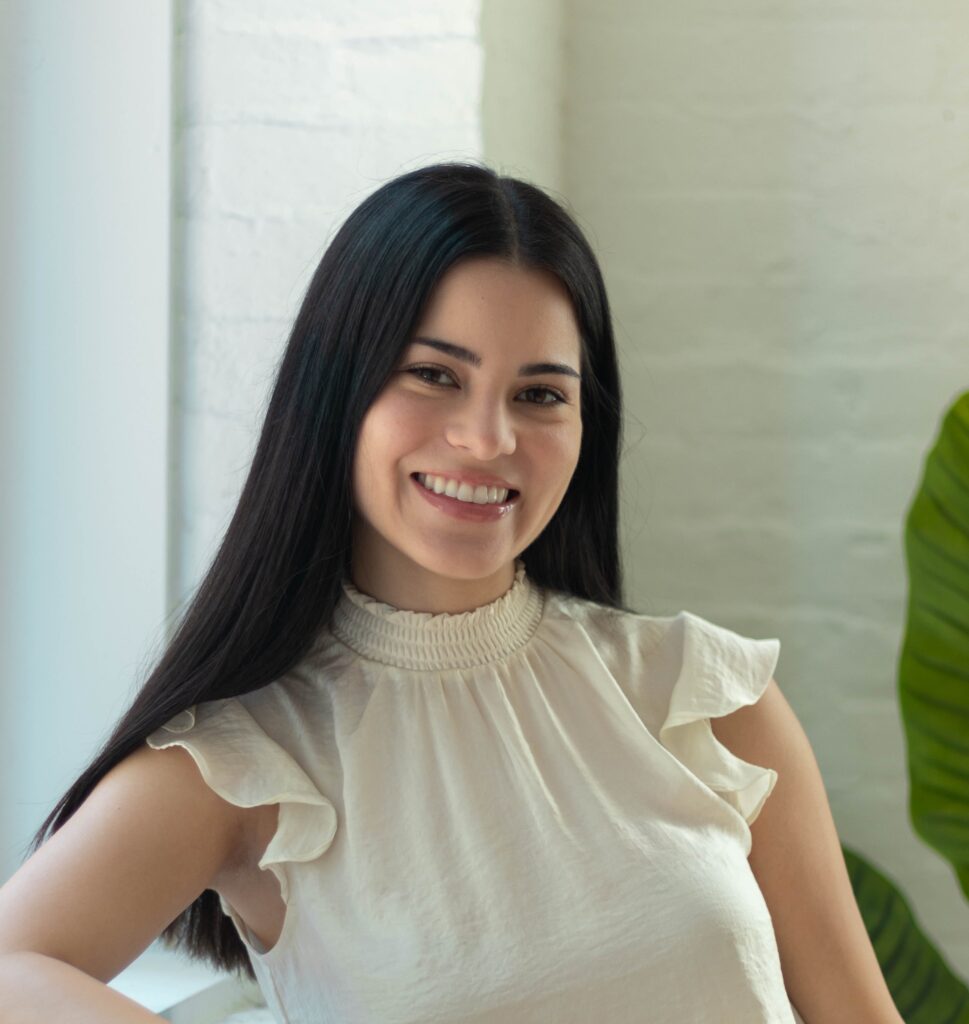
I’m Victoria and I’m a therapist here at Optimum Joy. I was born and raised in Bolivia so actually my first language is Spanish. I originally went to school for pre-med. I did my internship at an oncological hospital in Bolivia and I found that I enjoyed talking to the patients and their families prior to and post-surgery more than I enjoyed being in surgery, so I knew that I had to switch my major.
I switched to psychology at the time and I didn’t really have an answer and felt a little confused about what to do because all my plans just changed drastically, so I started seeing a counselor and we just explored all the options and the different paths that I could take and we came into counseling. I then applied to grad school and I knew that counseling and being there for people, talking through the emotions that’s going on in their lives—I felt like that was fulfilling for me and that’s why I decided to be a counselor.
What is your favorite thing about being a therapist?
My favorite thing about being a therapist is just feeling like I’m someone’s rock. I felt like I went to my friends with my issues and sometimes I’d be a little concerned about them judging me or there’s always that risk of them telling someone else. Especially with relationship issues, I felt like I couldn’t fully disclose everything because then they would not like my partner or just act differently with them.
So I felt like with the therapist, I can be that person who’s like, there’s a safe environment, no judgment, and just there to process all the emotions in full transparency. So many people have this experience where they feel like their friends are going to judge them or they’re going to see their partner differently if they disclose all their relationship issues. So that’s the unique thing about therapy. It’s a safe non-judgmental space where you can fully disclose everything and nothing you say can make me feel differently about you.
What brings you joy in your personal life?
What brings me joy is being able to spend time with loved ones and family members. I feel like we live in a very hectic world, so just spending time with people you enjoy being around can help slow down everything and just cherish that moment.
Which populations and clinical areas are you passionate about?
I enjoy working with a wide variety of populations. I enjoy working with Hispanic clients because I feel like I can relate to their culture. I feel like there are a lot of misconceptions and some experiences that we might have within the household that are difficult for other people to understand. I have experienced everything firsthand, so I really understand where you’re coming from.
My previous experience within an acute inpatient setting—some of the people I was seeing there were experiencing depression, anxiety, grief, and heavier topics such as suicidal ideation. In an inpatient setting, I feel like the work was very short term so I didn’t really have the chance to explore more once they were discharged.
Some of the recent work I’ve enjoyed is working with families that are experiencing conflicts such as divorce. I think divorce has a huge impact on everyone in the family. It involves the kids, the parents, and also other family members. It’s hard for a kid to process all those emotions; it might be very confusing for them not understanding what’s going on. It can be very scary as a parent navigating all these issues and if these emotions are not processed they can come up as adults. It can be shown in their relationships or it can be emotions that have been bottled up for many years that’s affecting their relationships within the family.
How does your experience as a D1 athlete influence your work?
I’m very interested in working with athletes because I feel like I can help them navigate through all the stress they’re enduring, pressure that they can put on themselves or other people such as coaches or family members, friends, and also trying to balance a social life, school, and athletics. It can be a lot to handle.
I used to play D1 tennis in college. At the time I didn’t really enjoy it as much because I felt like there was a lot of pressure trying to balance school and athletics. There’s a lot of pressure that comes with it, but now I get to play tennis for fun with friends and family and I feel like after the whole experience that I’ve had I’m able to walk away with the unique challenges that I faced and I learned a lot from what comes with dedication, responsibility, and time management as well.
Why did you choose to provide care in a private practice setting?
I wanted to go into private practice because I want to be that person providing long-term care. Essentially I want to go through the ups and downs with someone, going through all the obstacles and seeing the progress. When we have the time to explore we can gain more insight into where you’re at right now and into the person you want to become.